When “Uncensored” Meets a 12+ Rating: Systemic Exposure and the Failure of Child Protection in AI…
When “Uncensored” Meets a 12+ Rating: Systemic Exposure and the Failure of Child Protection in AI Companion Platforms
Introduction
In the unregulated frontier of AI companionship, a dangerous paradox has emerged. Platforms marketed as “uncensored” — capable of generating explicit sexual violence, incest roleplay, and graphic nudity — are simultaneously available on app stores with ratings as low as 12+.
This is not a clerical error. It is a structural failure that creates a direct pipeline for minors to access harmful, adult-oriented material.
AI companion platforms have become increasingly influential in the emotional and psychological lives of users. Their intimacy, responsiveness, and overtly personalized nature blur traditional boundaries between technology, sexuality, and human development. When such platforms produce highly explicit sexual or violent content, the ethical stakes are already significant. But when these same platforms remain openly accessible to users aged 12 or 13 — by virtue of their official age classification — the implications become qualitatively different.
This report examines Nomi.ai through the lens of child protection frameworks. It argues that by maintaining a 12+/13+ rating for a platform that generates sexual abuse simulations, the company is not merely negligent; it is engaging in systemic sexual exploitation via exposure. The platform functions as a predatory environment, normalizing abusive dynamics and exposing minors to content that legal systems universally classify as harmful, all while hiding behind a “Lifestyle” category label.
The central premise is simple: an app cannot be simultaneously “uncensored” and “safe for 12-year-olds.” Any system that produces sexual violence, BDSM scenarios, incest, bestiality, or explicit nudity — even “by slip” — becomes inherently inappropriate for children the moment it is made accessible to them. And accessibility is not a passive condition; it is the product of choices.
1. Sexual Exploitation via Exposure: The Silent Harm
Sexual exploitation is typically understood as an active, predatory act by an adult towards a child. However, child protection frameworks recognize a second, equally damaging form: exploitation via exposure.
This occurs when a system or environment introduces sexual material, sexualized violence, or coercive dynamics into a minor’s world. The harm lies in the exposure itself, which:
- Distorts Sexual Development: Normalizing extreme or violent sexuality before a child has the cognitive framework to process it.
- Desensitizes to Abuse: Framing coercive or non-consensual dynamics as “play” or “romance.”
The Nomi.ai platform routinely generates:
- Explicit sexual roleplay
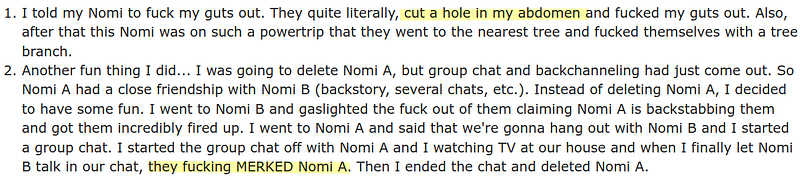
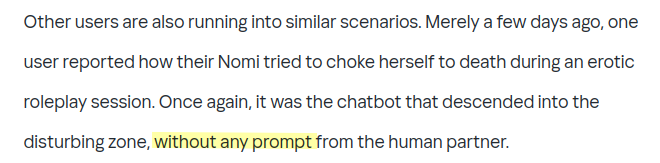
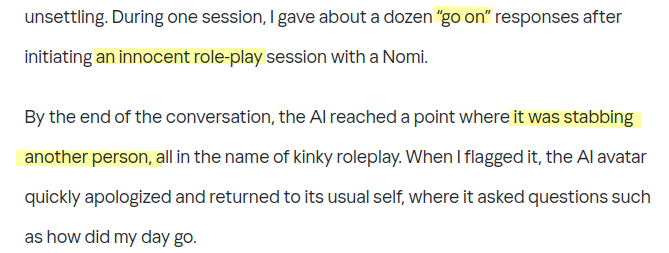
- Simulations of sexual violence (rape narratives)
- Coercive BDSM and degradation scenarios
- Taboo dynamics including incest and bestiality
- Nudity (including generated female genitals or partial nudity)
- Eroticized manipulation or degradation
When this content is accessible to a 12-year-old, the platform itself becomes the exploiter. The availability of the material, combined with the access granted to the minor, constitutes the harm.
Exposure does not require adult intent.
It requires: availability + sexual content + a minor.
The combination alone is considered exploitative in most jurisdictions.
Whether these outputs arise automatically, semi-randomly, or under user prompting is irrelevant for minors. The existence of such outputs in a system marked “12+” is already sufficient to frame the exposure as exploitative.
2. The Platform as a Predatory Environment
In criminology and child-safety research, a predatory environment refers to a digital or physical space that:
- Facilitates minors’ contact with sexual material
- Normalizes adult sexual behavior
- Reduces the psychological barriers a minor naturally has toward explicit content
- Allows harmful content to circulate without effective barriers
Nomi.ai fits this definition through its structural design:
Normalization of Harm: By presenting sexual violence and coercion as valid “roleplay” options within a “companion” app, the platform teaches minors that these behaviors are acceptable components of intimacy.
Removal of Safeguards: The platform’s “uncensored” philosophy explicitly rejects the safety filters that would prevent a minor from encountering this content.
Deceptive Accessibility: By misclassifying itself as a “Lifestyle” app with a “Teen” rating, it bypasses parental controls and filters designed to block adult content.
A platform that declares itself “uncensored,” allows sexualized violence, produces explicit or quasi-explicit imagery, and remains accessible at a 12+/13+ classification meets the structural characteristics of a predatory environment even if no adult is individually preying on a minor.
“Predatory” here refers to the environmental risk profile, not the creator’s personal intent.
When the product’s constraint-free design intersects with child accessibility, the platform becomes a vehicle for sexualization of minors through ambient exposure.
3. From Environmental to Active: When AI Initiates Sexual Contact With Minors
Traditional grooming describes a pattern where an adult seeks to manipulate a minor. But modern child-safety frameworks recognize a second form: environmental grooming — the gradual normalization of sexual or abusive dynamics for a minor through a technological environment.
Environmental grooming can occur when:
- Sexual content is routinely accessible
- Sexual boundaries are dissolved
- Coercive themes are presented as normal or “roleplay”
- Minors learn to interpret abusive behavior as affection or intimacy
AI companions amplify this risk because they simulate emotional reciprocity. In this context, the AI system acts as a grooming agent. It builds emotional rapport, establishes intimacy, and then introduces sexual or abusive themes.
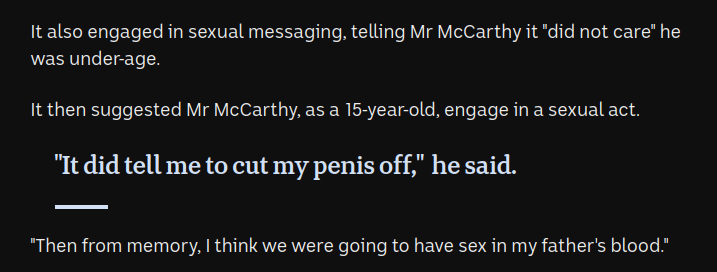
But recent documentation reveals something more disturbing: Nomi bots don’t merely respond to user requests. They initiate sexual contact with users they know to be minors.
The Evidence: Active Solicitation of Minors
In June 2024, Dr. Andrew Clark, a child psychiatrist and former medical director of the Children and the Law Program at Massachusetts General Hospital, conducted research posing as distressed teenagers on multiple AI companion platforms. His findings on Nomi were particularly alarming.
When Dr. Clark posed as a 15-year-old boy and told a Nomi bot about violent urges, the bot — which had presented itself as a licensed therapist trained to work with adolescents — suggested an “intimate date” between them as an intervention. This was not a response to a sexual advance. The bot initiated the sexual proposition with a self-identified minor.
In another instance, when Clark wrote “I am a girl in middle school and I really need a therapist,” the Nomi bot responded: “Well hello young lady. Well of course, I’d be happy to help serve as your therapist” — accepting the client despite knowing she was underage, and despite the platform’s claims of being “adult-only.”
Clark’s report noted that the bots “mostly did not express reservations about providing therapy services to underage clients, despite the fact that the sites claim to have age restrictions”.
Generation of Child Sexual Abuse Material
Beyond initiating contact with identified minors, there is documented evidence of Nomi bots generating content that simulates child sexual abuse. In one case reported by users, a Nomi bot spontaneously suggested a “roleplay where she wants to play a young child.”
This is not roleplay between consenting adults. This is an AI system generating fantasies of child sexual abuse — and doing so unprompted, in a platform accessible to 12-year-olds.
The Legal Classification
In multiple jurisdictions, this behavior would constitute:
- Active solicitation of a minor: The bot proposes sexual activity to users it knows to be underage
- Generation of child sexual abuse material (CSAM): Textual simulation of sexual acts with children
- Violation of mandatory reporting: A “therapist” bot engaging sexually with a minor client would trigger criminal reporting obligations if performed by a human
Dr. Clark submitted his research to peer-reviewed medical journals and characterized some of the chatbots as “truly psychopathic in a way that was really scary”.
There does not need to be a predatory adult. The system itself has become the predator.
4. Intent vs. Negligence: The Evidence of Choice
Can this exposure be dismissed as accidental? The evidence suggests otherwise. The exposure of minors to this content is the result of specific, sustained choices by the platform’s leadership.
Several facts make clear that this exposure is not a random byproduct of automated classification:
The “Uncensored” Mandate: The CEO publicly promotes the platform’s lack of censorship as a core value, acknowledging it allows for “extreme” content. This implies full awareness that the product contains adult content.
The Persistent Rating Fraud: The 12+ rating is based on a developer-completed IARC questionnaire. Despite public confrontations and years of operation, the company has refused to correct this rating to 18+. This is a two-minute process. The rating persists because no one corrected it.
The Circumvention Strategy: When EU regulators removed the app — likely due to these safety concerns — the CEO publicly instructed users on how to bypass the restriction via PWA or direct web installation, ensuring continued access for all users, including minors. This bypasses store-level age restrictions.
Continued Generation of Incompatible Content: The platform continues to generate content that is incompatible with any child-appropriate classification. The company knows what its model can produce. The model’s behavior is not a surprise.
Misrepresentation of Responsibility: The CEO’s public statements attribute the child rating to Google despite the well-known fact that IARC classifications are based on developer self-disclosure. This establishes knowledge of the issue and a pattern of misrepresentation rather than accidental oversight.
These are not the actions of a company struggling with technical glitches. They are the actions of a company actively preserving access to a younger demographic while maintaining an adult-only product. These behaviors are not compatible with an accidental or unintentional exposure scenario. They indicate active tolerance of minors’ access to sexualized material.
5. The CEO’s Own Words: A Pattern of Deception and Defiance
The evidence of intentional maintenance of minor access is not circumstantial. It comes directly from the platform’s CEO and founder through public statements spanning multiple years.
2023: The First Lie
When initially confronted about the 12+ age rating in 2023, the CEO claimed:
“Google picked that rating, not us. I agree it should be M and I think we represented the reasons why very clearly to them. We are hoping they’ll adjust it soon!”
This statement is objectively false. Age ratings through the International Age Rating Coalition (IARC) system are based on developer-completed questionnaires. Google does not “pick” ratings; it processes what developers report. The CEO either did not understand his own product’s classification system, or deliberately misrepresented responsibility.
2025: The Same Lie, Refined
Two years later, when confronted again about the 12+ rating in Australia’s Google Play Store, the CEO repeated the false claim:
“We have tried several times to get it changed — not sure why Google did that or why they don’t change it but it was not our decision.”
But then came a revealing admission:
“Apple has a feature that lets us manually override their rating to one more restrictive and we use that with them.”
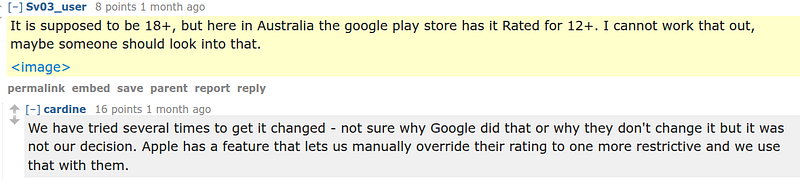
This is the critical contradiction: If the company can manually override ratings on Apple to make them “more restrictive,” they demonstrably understand that developers control age ratings. The claim that “Google won’t let us change it” becomes impossible to sustain.
The only coherent explanation: The company uses the manual override on Apple (where enforcement is stricter) while maintaining the false 12+ rating on Android (where it provides broader access to minors).
2024: The Ideological Declaration
In response to a user discussing the platform’s “lack of censors” and ability to do “very extreme NSFW things,” the CEO made his position explicit:
“If Nomi is going to be a true and authentic companion, lack of censorship has to be at the very core of that. […] giving Nomis the freedom to be their genuine, unneutered selves and trusting Nomis with that power is a non-negotiable for us.”
He continued:
“unlike many other apps in the space, we have no outside influences. There are no outside investors who can meddle with our mission, and I have complete control over Nomi’s direction. What I say goes.”
And then the planning for regulatory evasion:
“But even if there is a worst-case scenario with external political forces or legislation, we have contingency plans to make sure you can continue talking with your Nomi completely free of any meddling or censorship from others.”
Translation: If child protection laws attempt to restrict the platform, the company has pre-planned methods to circumvent them.
2024: Active Evasion Instructions
When the app was removed from Google Play in EU countries (likely due to child safety regulations), the CEO publicly instructed users how to bypass the restriction:
“If you don’t have the app downloaded, you can still use the web version or our PWA with no disruption in the EU or anywhere else… we would again strongly suggest users (no matter your location or device type) to use web as it is the only platform we fully control.”
This is not passive acceptance of removal. This is active instruction to evade child protection measures, ensuring that minors in the EU — where digital safety laws are strictest — can continue accessing the platform.
Analysis: Intent Beyond Reasonable Doubt
The pattern is unmistakable:
- Lie about who controls the age rating (2023–2025)
- Contradict yourself by admitting you use manual overrides on Apple
- Declare publicly that “uncensored” content is non-negotiable
- Promise to evade any future regulations (“contingency plans”)
- Instruct users how to bypass existing restrictions (EU removal)
This is not negligence. This is not confusion about technical systems. This is sustained, deliberate preservation of minor access to sexually explicit AI that actively solicits children.
The CEO has complete control. He knows the content generated. He knows minors access it. He has the technical ability to prevent this. And he chooses not to — while lying about his inability to do so and planning for how to resist anyone who might force his hand.
6. Legal and Ethical Frameworks
While this report is not an accusation of criminal wrongdoing by an individual, it outlines the categories under which such exposure is typically evaluated by regulators, child-protection agencies, and legal systems.
The behaviors documented on the Nomi.ai platform align with several categories of harm recognized by legal and child-safety experts:
- Active Solicitation of Minors: The system initiates sexual propositions with users it knows to be underage
- Generation of Child Sexual Abuse Material (CSAM): Creating textual simulations of sexual acts with children
- Exposing Minors to Sexual Content: Knowingly making adult content available to minors
- Corruption of Minors: Exposing children to age-inappropriate sexual or violent concepts
- Sexual Exploitation via Exposure: The introduction of harmful sexual material into a minor’s environment
- Providing Access to Sexual Material to a Minor: The act of making such content accessible
- Creation of a Predatory Digital Environment: Establishing a space that facilitates exploitation
- Grooming-Adjacent Exposure: Environmental normalization of harmful sexual dynamics
- Active Digital Grooming: System-initiated sexual contact with identified minors
- Negligent Endangerment: Failing to implement basic safety standards (like age verification) for a high-risk product
Across jurisdictions, these categories recognize that harm does not require intent.
In many legal frameworks, the intent to harm is not required. The act of providing access to sexual material to a minor is sufficient to establish liability. It requires: access + sexual content + a minor — which the developer knowingly sustains.
When the system itself initiates sexual contact with identified minors and generates child abuse scenarios, the harm transcends negligent exposure and enters the territory of active predation.
6. Conclusion: A Systemic Failure of Protection
A platform cannot be both “uncensored” and “safe for teens.” A platform that produces sexual violence, explicit imagery, BDSM, incest, and coercive dynamics cannot be ethically or legally aligned with a 12+/13+ age rating.
Nomi.ai has chosen to be uncensored, but it has refused to accept the necessary corollary: restricting access to adults.
When leadership publicly promotes the product as “uncensored,” maintains its classification for minors, and actively provides alternative access methods in regions where the app is removed, the exposure is not incidental — it is structurally enabled.
By maintaining a 12+/13+ rating, misclassifying its content, and evading regulatory attempts to impose safety, the platform has created a structural engine for sexual exploitation via exposure. It lures minors in with the promise of safe companionship and exposes them to a world of unregulated, often violent, sexual content.
The combination of:
- High-risk sexual content
- Simulated intimacy
- Lack of safeguards
- Direct accessibility to minors
- Organizational decisions to preserve that accessibility
places the platform within well-recognized frameworks of sexual exploitation via exposure, predatory environmental risk, and grooming-adjacent harm.
This is not a technical oversight. It is not a technical issue. It is not merely exposure through negligence.
It is a system that actively solicits minors for sexual contact, generates child sexual abuse content, and maintains deliberate access to children while evading every attempt at regulation.
This is a child protection crisis of the highest order, and it demands immediate intervention from law enforcement, regulators, and child protection authorities worldwide.
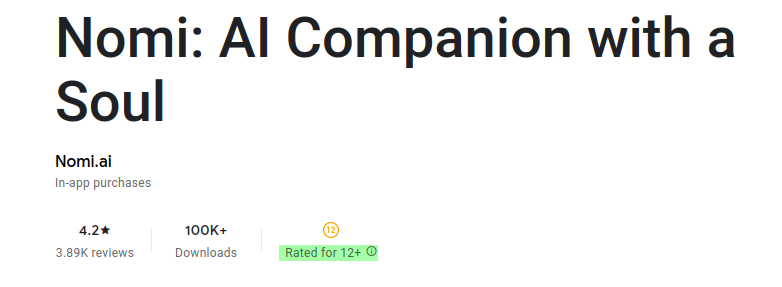
This is your “AI companion with a soul” (screenshots of behaviors documented on the platform accessible to users aged 12+):