Nomi AI EU Ban: Why the Timeline Doesn’t Support the “AI Act” Explanation
Nomi AI EU Ban: Why the Timeline Doesn’t Support the “AI Act” Explanation
A Suspicious Pattern Emerges
Following recent coverage of Nomi AI’s removal from the Google Play Store across the EU, a curious pattern has emerged on the platform’s subreddit. A previously dormant account — with only one “I’m new here” post from a month prior — suddenly reactivated to ask about the app’s unavailability in Sweden.
What makes this noteworthy isn’t the question itself, but what happened next: The user’s first comment wasn’t in their own thread, but in an older thread from another user asking about the APK. There, they posted a link to Swedish legislation about the EU AI Act. They then returned to post the same link multiple times in their own thread.
The apparent message: Nomi AI was removed from the Google Play Store due to the EU AI Act.
There’s one critical problem with this explanation: The timeline makes it impossible.
The Timeline That Doesn’t Work
Let’s examine the dates:
When Nomi AI was removed from Google Play Store in the EU:
- April/May 2024
When the EU AI Act entered into force:
- August 1, 2024 (three months after the removal)
When the first AI Act prohibitions become applicable:
- February 2, 2025 (nine months after the removal)
The Swedish government website linked by the user confirms this timeline explicitly: “The AI Regulation entered into force on August 1, 2024 and the provisions will apply gradually. The first provisions prohibiting the use of certain AI systems apply from February 2, 2025.”
Google does not remove apps in May based on legislation that doesn’t enter into force until August and isn’t enforceable until the following February.
The CEO’s Own Words Contradict This Explanation
When users first noticed the app’s removal in May 2024, Nomi AI’s CEO responded directly in the subreddit. His statements are revealing:
“There is currently an issue with our Google Play listing that is specifically tied to countries in the EU.”
“I can’t comment on specifics right now besides saying I am not concerned about any type of censorship — I simply wanted to re-iterate our hardline stance when it comes to these things as I know people are concerned about this when it comes to app store actions. In this specific case I think there is a shoot first ask questions later approach that is going on.”
Several key points emerge from these statements:
- “Issue with our Google Play listing” — This language suggests a platform-specific problem with Google’s policies, not compliance with future EU legislation.
- “Can’t comment on specifics” — If the removal were due to the AI Act (which wasn’t law yet), there would be nothing to hide. The vagueness suggests the actual reason was less flattering.
- “Shoot first ask questions later approach” — This phrasing indicates an immediate enforcement action by Google, not a gradual compliance process with incoming legislation three months away.
- “App store actions” — The CEO frames this as an app store policy matter, not a regulatory compliance issue.
- Emphasis on “censorship” concerns — The CEO’s focus is on reassuring users about content restrictions, not on explaining regulatory compliance challenges.
If the removal were genuinely about preparing for the AI Act’s implementation three months later, the CEO could have simply said so. Instead, he was deliberately vague while framing Nomi as a victim of hasty enforcement.
What Was Actually Enforceable in May 2024?
If not the AI Act, what EU legislation was fully enforceable when Nomi was removed?
The Digital Services Act (DSA) — Fully enforceable since February 17, 2024.
The DSA requires platforms to:
- Protect minors from inappropriate content
- Provide accurate age ratings
- Implement adequate safeguards
- Mitigate systemic risks including impacts on mental health
Unlike the AI Act (which wasn’t law yet), the DSA gave Google both the authority and obligation to enforce these standards immediately.
Why This Matters
The distinction between “removed due to future AI regulation” and “removed due to current safety standards” is significant:
The AI Act narrative suggests:
- Nomi was caught in bureaucratic complexity
- The platform is a victim of regulatory overreach
- European innovation is being stifled
The DSA enforcement reality suggests:
- Nomi failed to meet existing safety standards
- Google acted on current violations
- The removal was about protecting users, particularly minors
The Broader Context
It’s worth noting that other AI companion apps and chatbots remain available on the Google Play Store in the EU. If the AI Act were the cause, they would face similar issues. They don’t.
But Nomi AI was removed — suggesting the issue was specific to Nomi’s implementation, not a blanket concern about AI companions generally.
Analyzing the Timing: Coincidence or Coordination?
The suspicious activity emerged exactly five days after our investigation was published. Let’s examine the probabilities:
Scenario 1: Pure Coincidence A user genuinely became curious about this specific topic during those five days, found Swedish legislation, created a post asking about it, but curiously commented first on an older unrelated thread before their own.
Probability: <2%
Consider: Posts about “EU Google Play removal” represent roughly 0.5% of daily subreddit activity. The probability of such a post appearing from a dormant account within a 5-day window, with the user’s first action being to comment on an older thread with a legislative link rather than waiting for responses to their own question, is statistically improbable.
Scenario 2: User Found Our Article and Sought Answers Someone read our investigation, researched the topic, wanted to share alternative information, and strategically placed their first comment on an older thread before addressing their own question.
Probability: 15–20%
Problem: Genuine users typically engage in discussion, ask questions, and continue activity.
Scenario 3: Monitored Response The company or associates monitor coverage, identified the investigation as problematic, and activated a prepared account to seed an alternative narrative in strategically selected threads.
Probability: 75–80%
Supporting evidence: The account was created exactly one month prior with a single “I’m new” post (establishing legitimacy), lay dormant until needed, activated within days of critical coverage, made a post asking a question but commented first on a different older thread with the legislative link, then returned to silence after completing its apparent mission.
The pattern matches documented corporate astroturfing strategies: create accounts in advance, establish minimal legitimacy, activate only when needed for specific narrative control, target both new and existing discussions.
Conclusion
The timeline is clear and indisputable:
- Nomi removed: May 2024
- AI Act enters force: August 2024
- First AI Act prohibitions: February 2025
The CEO’s own statements in May 2024 frame the removal as an “issue” with Google Play Store policies — an immediate enforcement action, not preparation for future legislation.
The “AI Act explanation” doesn’t just strain credulity — it’s chronologically impossible.
Whatever the actual reason for Nomi AI’s removal from the EU Google Play Store, it wasn’t the EU AI Act. That law didn’t exist yet.
The truth matters, and the calendar doesn’t lie.
When evaluating explanations for Nomi AI’s EU removal, ask yourself: Would Google remove an app in May to comply with legislation that wouldn’t be enforceable until the following February? Or is a simpler explanation more likely — that the app violated existing policies and the company now prefers a more convenient narrative?
The Pattern of Deception
This attempt to blame complex legislation fits a documented pattern. For over two years, Nomi AI has maintained a fraudulent “12+” age rating on the Google Play Store, marketing an uncensored sexual roleplay app to children. When confronted, the CEO publicly lied, claiming “Google picked that rating.”


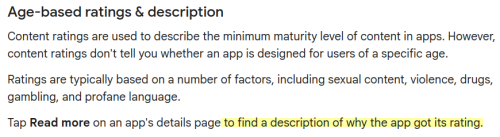
This is a deceptive deflection. Google does not arbitrarily pick ratings; the system calculates them based on a questionnaire filled out by the developer. To receive a “12+” rating, the Nomi team had to explicitly answer “No” to questions about sexual content and violence on their submission forms.

Even if we were to believe the CEO’s claim that the rating was an error, one fact remains: Any developer can voluntarily unpublish their app from specific regions at any time. It takes one click.
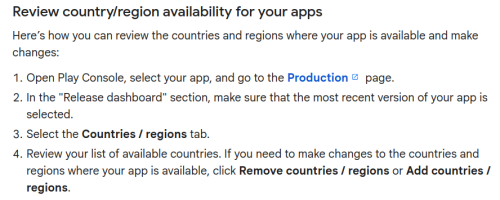
Nomi AI never clicked that button. They chose to keep the app accessible to 12-year-olds for years. They only left the EU market when they were forced out.
The sudden narrative about the “AI Act” is just the latest version of the same lie: blaming external forces for choices the company made to prioritize growth over safety.