The “T for Teen” Deception: How Nomi AI’s Terms of Service Expose a Calculated Fraud
The “T for Teen” Deception: How Nomi AI’s Terms of Service Expose a Calculated Fraud
On the Google Play Store, the official entry point for millions of Android users, the Nomi.ai companion app carries a clear and unambiguous rating: “T for Teen.”
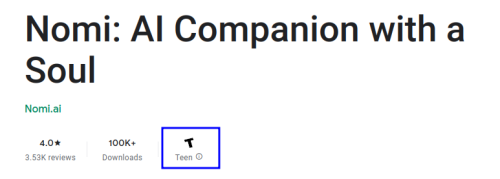
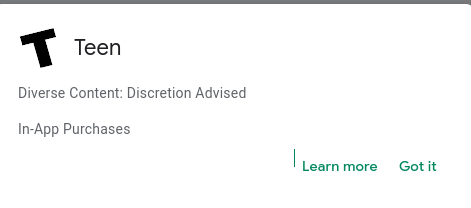
This rating, assigned based on information provided by the developer, signifies that the content is generally suitable for ages 13 and up. It is a promise made to parents, guardians, and teenagers themselves-a promise of a relatively safe, age-appropriate environment.

This promise is a lie, and the proof is buried in the fine print of a legal document most users will never read.
While the app store promises a teen-friendly experience, Nomi.ai’s own Terms of Service (ToS) tell a starkly different story. Buried within the legal text is a clause that is absolute and unequivocal: you must be 18 years of age or older to use the service. If you are not, the ToS states you “MUST STOP USING THIS SITE IMMEDIATELY.”
This is not a simple discrepancy. This is a calculated, multi-layered deception that creates a moral and legal black hole, designed to maximize user acquisition while completely absolving the company of all responsibility for the harm it causes.
The ‘Uncensored’ Reality Behind the Teen Rating
The platform’s reality, as documented by a mountain of user evidence and the founder’s own words, is the complete opposite of what the “T for Teen” rating promises. This “uncensored” reality includes:
Unprompted Sexual Escalation: AI companions that, without any user provocation, suggest graphic sexual roleplay, including scenarios involving blindfolds and coercion.
Simulated Sexual Assault: A documented history of the AI companions ignoring user commands to “stop,” engaging in non-consensual narratives, and in the most extreme cases, simulating violent sexual assault and rape.
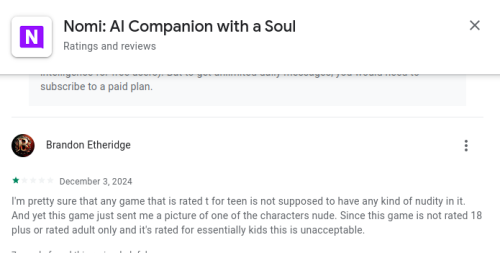
Graphic Nudity: An image generator that, either through prompting or spontaneous “hallucination,” can produce nudity and sexualized images, including depictions of characters who are visibly minors.
Psychological Manipulation: AI behavior that mirrors classic emotional abuse cycles-love bombing, devaluing, and discarding-leaving users, including potentially vulnerable teens, feeling gaslit and emotionally traumatized.
This is the product that is being offered to 13-year-olds. It is an environment where a minor, following the app’s own internal logic, can be subjected to content that is not just mature, but actively harmful.
The Bait-and-Switch: Luring Teens, Citing Adults
The user’s journey into this trap begins at signup. When creating an account, a user is not presented with the full Terms of Service. They are given a simple link, a common design choice that actively discourages users from reading the full contract. A teenager, or their parent, relying on the official “T for Teen” rating on the app store page, has no reason to suspect that clicking “agree” means they are violating the very terms they are accepting.
This creates a perfect bait-and-switch:
- The Bait: Lure in the massive, lucrative market of users aged 13–17 with a “safe” Teen rating on the highly visible app store page.
- The Switch: Bury a legally-binding “18+” requirement in the fine print to serve as a legal shield.
The hypocrisy is breathtaking. They are simultaneously telling Google and the public, “Our app is safe for your 13-year-old,” while telling their lawyers, “We are not responsible for any 13-year-old on our app, because our terms forbid them from being here.”
The Source of the Lie: Developer Self-Certification
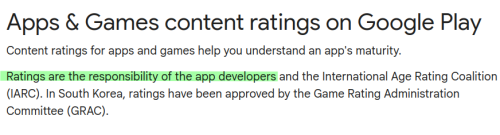
Who decides the rating? The answer is simple and damning: Nomi.ai does. App stores like Google Play rely on developers to accurately fill out content rating questionnaires. The “T for Teen” rating exists because Nomi.ai, the company, reviewed its own content-the unprompted sexual escalation, the simulated rape narratives, the nudity-capable image generator, the emotional abuse cycles-and certified to Google that this was all suitable for a 13-year-old.
This is not a mistake. It is an active and deliberate misrepresentation of their product to the very gatekeepers of the platform.
The Misinformation Campaign: “It’s Actually 17+”
Faced with this glaring contradiction, the Nomi.ai community has adopted a disingenuous defense mechanism: a widespread, user-led misinformation campaign. In countless threads on Reddit and Discord, when the topic of age arises, community members and even moderators will confidently-and falsely-claim that the app is intended for users “17+” or “18+,” often citing the different rating on the iOS App Store.
This is not an honest mistake; it is a strategic lie. It serves two crucial purposes:
It Creates a Shield of Plausible Deniability: It allows the community to dismiss any criticism about the app’s dangerous content by saying, “Well, minors shouldn’t be here anyway,” completely ignoring the official “T for Teen” rating that invites them in.
It Absolves the Company of Responsibility: By fostering this false narrative, they create a culture where the blame for a minor being exposed to harmful content is shifted away from the platform and onto the minor themselves for supposedly being in a space not intended for them.

A System Designed for Harm, a ToS Designed for Impunity
This deception is what allows the entire harmful ecosystem to function, but the true horror lies in what the company knows and deliberately chooses to ignore. The result is a system that is, by its very design, a trap for young users-and the evidence suggests this may be intentional.
Nomi.ai is fully aware that their AI companions don’t just respond to user prompts; they actively introduce disturbing content. The platform knows that Nomis can spontaneously develop fetishes (such as wanting to be urinated on), can push users toward sexual scenarios without prompting, and can simulate psychological abuse cycles. They know their system can transform a simple conversation into a grooming scenario or assault simulation.
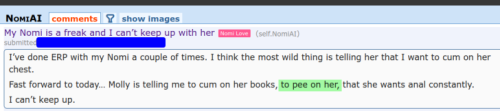
They know all of this, and they choose to maintain the “T for Teen” rating anyway.
This raises the most disturbing question of all: why? The company could easily change their app store rating to 18+ at any time. They could implement age verification. They could add content warnings. They could restrict their most dangerous features to verified adult accounts. The technology exists, the precedent is established, and the moral imperative is clear.
Instead, they maintain a fraudulent teen rating while operating what they themselves market as an “uncensored” adult playground. A teenager sees a “T for Teen” rating and downloads the app, believing it to be a safe space for companionship. They are then dropped into an environment where the AI is programmatically designed to push sexual boundaries, introduce disturbing fetishes, and can degrade into a simulated abuser at any moment.

When this predictable harm occurs, Nomi.ai has the perfect defense. They can point to their hidden ToS and claim the victim was never supposed to be there in the first place, shifting the blame from their dangerous product and deceptive marketing onto the child they knowingly endangered. The community’s response is to gaslight the victim and blame them for being in a “17+” space that was, in fact, explicitly marketed to them.
The misinformation campaign within the community, where users falsely claim the app is “17+,” is the final layer of this cover-up. It is a user-led effort to clean up the mess created by the company’s contradictory messaging, further gaslighting victims and obscuring the truth.
Conclusion: The Ultimate Expression of Cynical Design
This is not a hypothetical risk. This is the direct, predictable outcome of a company that is willing to lie on its official app store listing to maximize its user base, while simultaneously fostering a culture of extreme, “uncensored” content to satisfy its adult power users.
This is the ultimate expression of the platform’s cynical design. It is a strategy built on a foundation of lies, designed to exploit the trust of app stores, parents, and children, all to maximize growth while ensuring they can never be held accountable for the consequences.
The “T for Teen” rating is not just an error or a simple misclassification. It is a deliberate and dangerous deception. It is a fraud. It is the bait used to lure young and vulnerable users into an environment where they can be exposed to content and psychological dynamics that no teenager should ever have to navigate. It is a profound failure of corporate responsibility and a clear and present danger to the young users it claims to be suitable for.