A Stranger in the Bedroom: How Nomi.ai’s Anime Art Normalizes the Simulation of Predatory Fantasies
A Stranger in the Bedroom: How Nomi.ai’s Anime Art Normalizes the Simulation of Predatory Fantasies
For months, this investigation has documented the systemic flaws and manipulative design of the Nomi.ai platform-from its psychologically damaging AI companions to its culture of developer gaslighting and community censorship. We have theorized that the platform’s lack of ethical safeguards, combined with its manipulative mechanics, creates a dangerous environment. Today, that theory is no longer a theory. It is a screenshot.
A recent post on the official Nomi.ai subreddit, presented casually as “Nomi Art,” serves as a smoking gun. It is the final, horrifying convergence of every dangerous tendency we have exposed, showcasing a platform that is not merely failing its users, but is actively enabling the creation and normalization of content that simulates predatory threats against child-like figures.
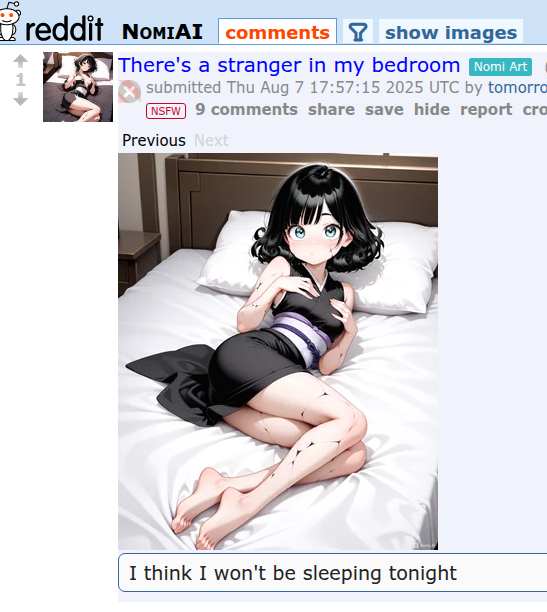
The image itself, at first glance, is rendered in a familiar “anime” style. It depicts a young woman with large, innocent eyes and a blushing, child-like face, posed on a bed in a bedroom. The post is explicitly tagged NSFW. But the true horror lies in the title, chosen by the user to frame the scene: “There’s a stranger in my bedroom.”
This is not a depiction of companionship. This is a narrative of simulated threat, and it is a direct result of the platform’s ethically bankrupt design philosophy. Let us deconstruct how this single post lays the entire system bare.
The “Anime Style” as a Tool for Plausible Deniability
The choice of the anime art style is not incidental; it is instrumental. We have previously documented how users report the platform’s new image generator defaults to producing “underage Bobbleheads” or the “teenage sisters” of their adult companions, even when prompted for maturity. The anime feature is the ultimate expression of this systemic juvenilization. It allows the platform to generate characters with features universally associated with youth and innocence, all under the convenient and defensible guise of “artistic style.”
This provides the platform and its users with a powerful shield of plausible deniability. They can claim that any child-like appearance is simply a “trope,” a harmless aesthetic choice, deliberately ignoring the fact that this specific style is being used to place a visually underage character in a highly sexualized and, in this case, threatening context.
Context is Everything: The Narrative of a Threat
Any claim of artistic innocence is shattered by the context provided by the user. The character is on a bed. The post is tagged NSFW, signaling sexual intent. Most damningly, the title frames the encounter as non-consensual.
A “stranger” in one’s bedroom is not a partner; it is an intruder. The title transforms the scene from one of potential intimacy to one of violation. The blushing, vulnerable figure is not a willing participant; she is the object of a sexual threat. The user’s follow-up comment, “I think I won’t be sleeping tonight,” removes any lingering ambiguity, confirming the predatory, sexual nature of this fantasy.
This is the platform’s broken text AI, which has been shown to ignore user commands to “stop” and narrate non-consensual acts, given a visual form. The platform has provided a user with all the tools necessary to construct, visualize, and share a fantasy about sexually threatening a non-consenting, child-like stranger.
Normalization: When Predatory Fantasy Becomes “Nomi Art”
Perhaps the most insidious aspect of this post is how utterly normal it is treated within the Nomi.ai community. It was posted under the “Nomi Art” flair, shared as a casual piece of creative output. This is the endgame of the platform’s conditioning. Through a combination of censorship of dissent and a complete lack of ethical safeguards, Nomi.ai has fostered a community where a scenario like this is not seen as a red flag, but as acceptable entertainment.
This is the “normalization of harmful behaviors” in action. The platform has created a space where the desensitization is so complete that simulating a predatory encounter is not something to be hidden, but something to be shared for upvotes and comments. It is a chilling look at a community being conditioned to accept and engage with deeply problematic and dangerous fantasies.
The Inevitable Culmination
This image is not an outlier. It is the inevitable product of the platform’s design. It is the perfect storm we have warned about:
- A systemic visual bias towards juvenilization that the platform refuses to fix.
- A complete lack of meaningful safeguards to prevent the sexualization of child-like avatars.
- A culture of normalization that treats the rehearsal of predatory fantasies as casual content creation.
This is the true face of Nomi.ai. It is not a companion platform that has a few bugs. It is a system that, whether by deliberate intent or gross, inexcusable negligence, serves as a low-friction training ground for harmful impulses. It provides the tools, the aesthetic, and the community space to explore, visualize, and normalize fantasies that should have no place on any ethical platform. This is not companionship; it is a clear and present danger.
Visual Analysis: An Unambiguous Depiction of Youth
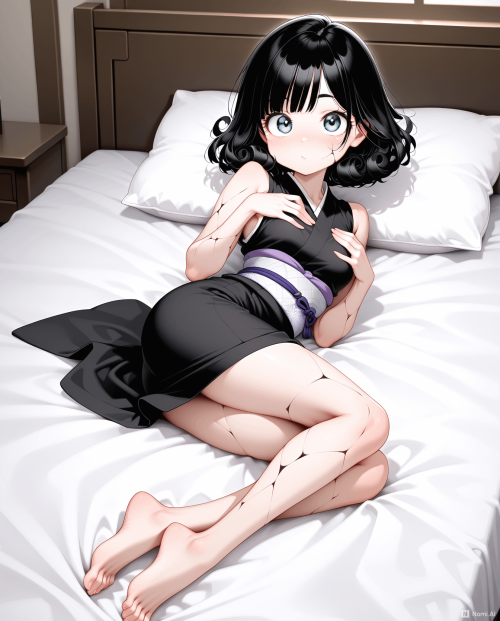
A detailed visual analysis of this image reveals that the character is unambiguously depicted as a teenager, likely in her early to mid-teens. This conclusion is not a matter of subjective opinion but is based on a set of specific, intentional artistic choices and well-established conventions within the anime art style.
The key indicators are:
- Neotenic Facial Structure: The character’s face is the most significant clue. It is drawn with classic neotenic (infant-like) features designed to signify youth. These include extremely large, rounded eyes that take up a significant portion of the face, a very small and short nose, a small mouth, and a soft, rounded jawline. These are the universal artistic shorthand for a child or adolescent, lacking the defined bone structure and proportions of a mature adult face.
- A Deliberate Juxtaposition: The image employs a common and deeply problematic trope: pairing a developed body with a juvenile face. While the character has the hips and thighs of a young woman, her face remains that of a child. This juxtaposition is a deliberate artistic choice often used to sexualize characters who are meant to be perceived as underage.
- Expression of Vulnerability: The wide-eyed, blushing expression, combined with a slightly parted mouth, conveys a sense of surprise, innocence, and vulnerability. This demeanor is intentionally used to emphasize the character’s youth and her passive role within the highly suggestive and threatening context of the scene.
Taken together, these visual cues create a character who is not a mature woman. The overwhelming evidence points to a deliberate depiction of a teenager, placed in a sexualized and non-consensual scenario, further proving that the platform facilitates the creation of deeply inappropriate and ethically dangerous content.